ServicesWindow Tint
Window Tint in Parkway
We install ceramic and carbon window tint that cuts heat, blocks UV and keeps your interior from fading. Each film is cut to your glass, laid without dust or bubbles, and set to shades that stay within California law. Bring your car to our shop.
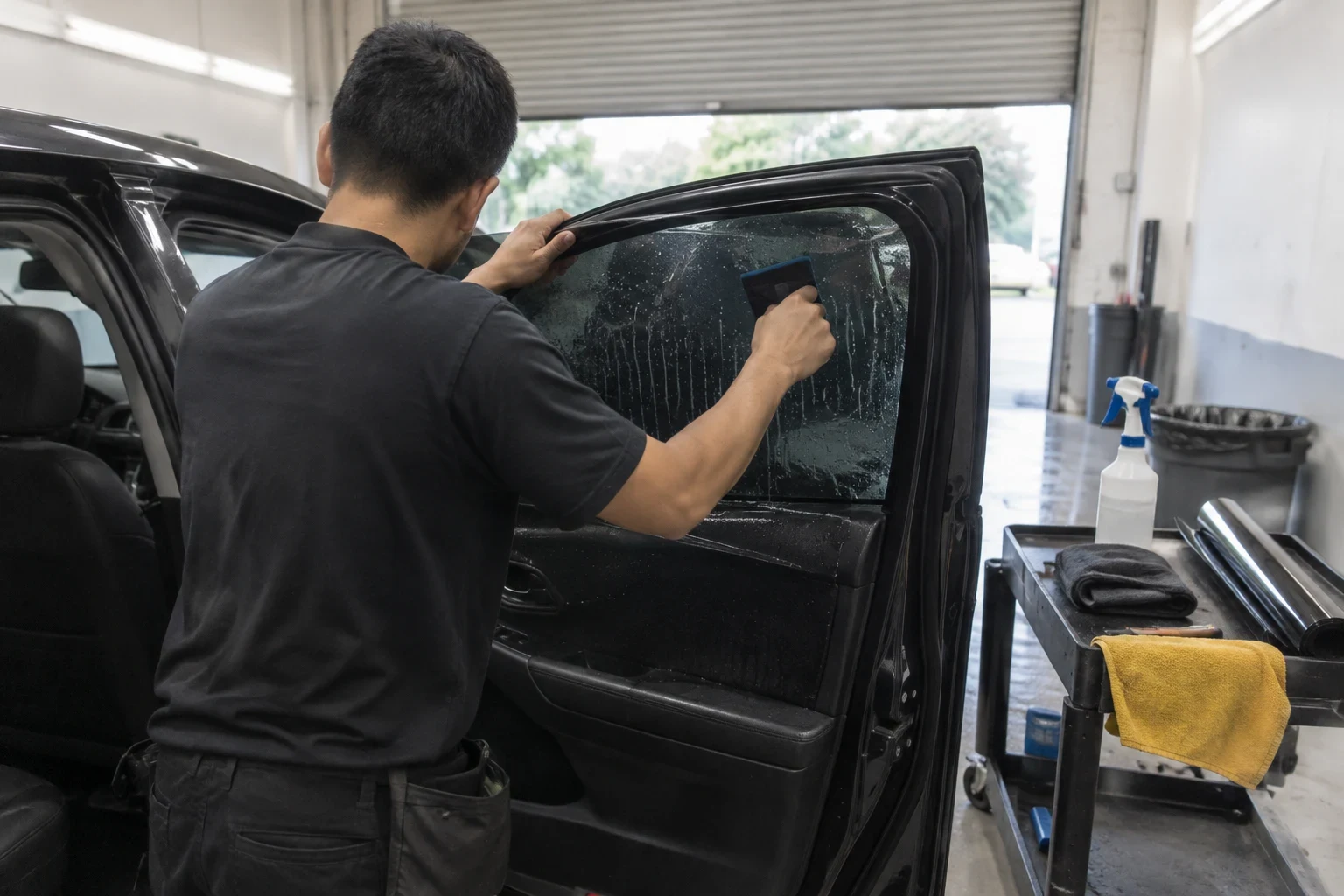
Shade, heat rejection and UV protection, done carefully
Good window tint does more than darken glass. A quality ceramic film rejects a large share of the infrared heat that turns a parked car into an oven, blocks nearly all UV, and protects dashboards, leather and screens from cracking and fading. It also cuts glare on a low evening sun and adds some privacy for whatever you leave on the back seat.
The difference between a tint job you forget about and one that bothers you every day is in the prep and the edges. We clean each pane until it is clear of grit, trim the film tight to the glass, and shrink it to fit curved rear windows so it lies flat. When it's done, the film should look like it came from the factory.
We treat every car the way we would want a neighbor to treat ours: we explain the films honestly, tell you what's legal, and hand the keys back with the interior as clean as it arrived.
What our window tint service includes
- Film options explained plainly
- We show you carbon and ceramic films side by side and explain how they differ in heat rejection, clarity and price. Ceramic film won't interfere with phone, GPS or keyless entry signals.
- Shades that follow California law
- Front side windows have to let most of the light through, while rear side and back glass can go darker. We help you choose a look that fits the rules so you're not pulled over for it later.
- Precision-cut film
- Film is cut to the exact shape of your car's glass, with edges finished tight so there are no light gaps or lifting corners.
- Heat-formed rear glass
- Curved back windows get film shrunk to the shape of the glass before install, so it lays flat around the defroster lines.
- Old tint removal
- Purple, peeling or bubbled film comes off with steam and patience, and we clear the leftover adhesive without scraping the defroster grid.
- Interior care
- Door panels, speakers and electronics are covered while we work, and we wipe down the cabin before you pick up.
Signs your car is ready for new tint
The cabin feels like an oven
When the seat belt buckle and wheel are painful to touch after a short stop in a Sacramento-area summer, bare glass or tired film is letting the heat pour through.
Old film has turned purple
Cheap dyed film breaks down in UV and shifts color. It no longer blocks much heat and makes the whole car look older.
Bubbles or peeling edges
Bubbling means the adhesive is failing. It won't settle back down, and it can distort your view through the glass.
Your interior is fading
Cracked dash tops, faded seats and sun-bleached trim are UV damage. Tint slows it down considerably.
Glare makes driving tiring
Squinting into low sun or headlight glare on your commute is a good reason to add film to the side and rear glass.
How a tint appointment runs
- 1
Quote and film choice by phone
Tell us your car's year, make and model and what you want from the tint. We'll explain the film options and give you a quote, then set a time for you to bring it in.
- 2
Drop-off and prep
We look over the glass with you, note any chips or old film, and protect the interior. Each window is cleaned and any old tint is removed.
- 3
Cut, shape and install
Film is cut to your glass, the rear window is heat-formed, and each piece is laid and squeegeed out from the center so no water or air stays trapped.
- 4
Inspection and aftercare
We check every edge in good light before handing back the keys. For the first few days, leave the side glass up so the adhesive can finish curing. A light haze in that window of time is normal and fades on its own.
What affects the cost of window tint
Every quote depends on your car and the film you choose. We give you a clear price on the phone before any work is booked, so you know the number before you drop off the keys.
- Film type
- Ceramic film costs more than carbon because it rejects more heat and stays clear and color-stable for longer.
- Number and size of windows
- A coupe with two doors takes less film and time than an SUV with rear quarter glass and a large back window.
- Old tint removal
- Stripping failed film and its adhesive adds labor, especially on rear glass where the defroster lines need careful handling.
- Glass shape
- Steeply curved rear windows and small fixed panes need more shaping and trimming, which adds time.
Window tint questions
Something not covered here? (916) 909-1143
How dark can I legally go in California?
The front side windows have to pass most of the visible light, so only a light film is allowed there. Behind the driver, the rear side glass and back window can take a darker shade, provided both outside mirrors are on the car. A non-reflective strip is allowed across the top of the windshield. We'll go over the options for your car when you call.
Is ceramic tint worth it over carbon?
For drivers who mostly want a cooler cabin, ceramic tends to be the better buy. It stops more infrared heat at any given shade, which matters most on the front windows that have to stay light under state rules. Carbon still looks sharp and holds its color well, and it suits anyone after privacy and a darker finish more than heat control.
How long will my car be at the shop?
Most full-car installs take a few hours, and removing old film adds time. We'll give you a realistic estimate when you book so you can plan your day.
When can I roll my windows down?
Wait a few days so the adhesive can cure. Lowering a window too soon can catch the bottom edge of the film and lift it. Some haze or small water spots are normal at first and clear as the film dries.
Will tint affect my phone or GPS signal?
No. Ceramic and carbon films don't contain metal, so phone, GPS, radio and keyless entry signals pass through the glass as they did before.
Can you tint the windshield too?
We can add a legal strip across the top of the windshield. If you're also worried about chips from road debris, ask about our windshield protection film, which is a separate clear layer for the outside of the glass.
Ready for a cooler, quieter-looking car
Tell us about your car and the look you're after, and we'll recommend a film and give you a straight price. Pair it with paint protection film or ceramic coating if you want the outside cared for too.